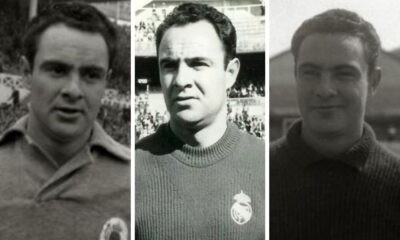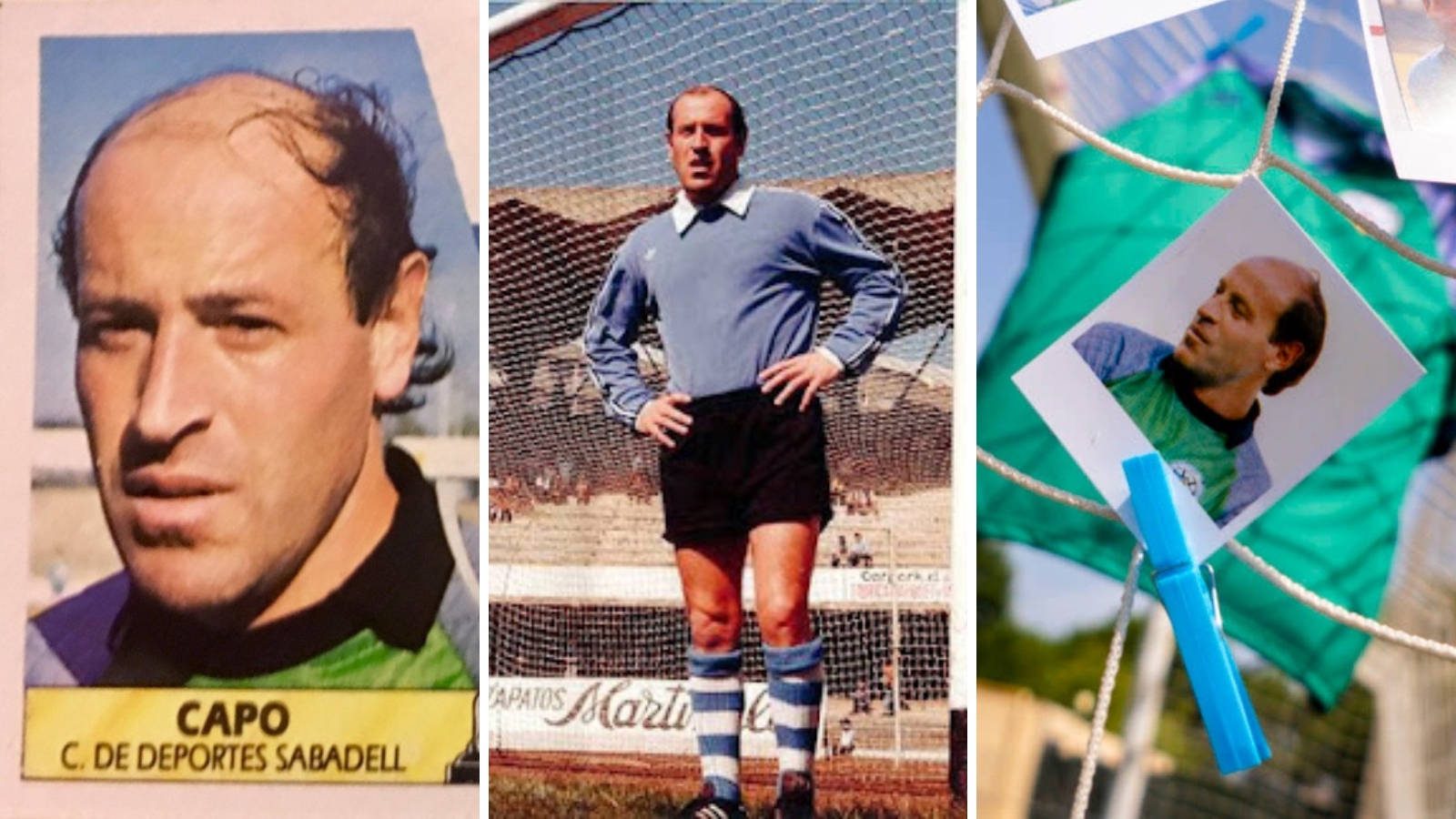
It is perhaps a coincidence that Menorca’s greatest-ever footballer was a goalkeeper that was followed by another outstanding number one a generation later.
Joan Capo Coll was born in Ciutadella in 1954, around the same time the legendary Juan Nito Bagur Coll, a European Cup winner with Real Madrid, was keeping goal in the top flight with Real Sociedad.
Capo was picked up by Real Madrid’s El Clasico rivals FC Barcelona in 1973, after impressing as a 17-year-old playing for Atletic Ciutadella in Tercera Division.
For a teenager leaving Menorca, it represented an extraordinary leap. Speaking in an interview with Menorca Es Diari, he recalled: “The first step was adapting to the change, leaving my town, my family, my friends, and arriving in a big city like Barcelona, and being there to play for a legendary team. But I understood that it wasn’t a dream, but a reality and an opportunity I had to seize.”
Capo suddenly found himself sharing a dressing room with the likes of Johan Cruyff, Carles Rexach, Juan Manuel Asensi and Jose Antonio Zaldua as Barcelona assembled the team that would win La Liga in 1973/74.
Capo was behind established goalkeepers Salvador Sadurni and Pere Valenti Mora and consequently never made an official appearance for Barcelona’s first team. He did, however, make eight appearances in non-competitive matches during that championship-winning season.
When Cruyff died in 2016, Capo paid tribute to the legend and the respect he had for his team-mates. Capo said: “He was a true teammate and friend, no matter how big a star he was. He was always at the top, yes, but he was a great person and always treated me perfectly, just like everyone else.
“He came to Sabadell for a match and he himself came to greet me. That gesture made a lasting impression on me; he never saw himself as superior to me nor did he ever look down on me, despite the huge impact he had at Barca.”
Becoming an Arlequinat
It was Capo’s next club, CE Sabadell, that defined his career.
He became a club legend at CE Sabadell, acknowledged in a tribute goalkeeper kit that the club launched ahead of the 2026/27 season where they even used playing cards of Capo in the launch.
🧅 Joan Capó és inigualable, però @5Ortegita i @Diego_Fuoli no haurien estat mals jugadors als anys 70 i 80 pic.twitter.com/qGmMTiqbUq
— CE Sabadell 🧅 (@CESabadell) August 16, 2026
Aquesta és la nova equipació de porters del @CESabadell per la temporada 2026/2027
Una samarreta que combina el passat i el present per una temporada molt especial pic.twitter.com/hqFAbBCFxo
— CE Sabadell 🧅 (@CESabadell) August 16, 2026
His first four seasons saw him make 162 appearances for the Harlequins and his performances earned him a move to Celta Vigo for four million pesetas. It was said that Celta decided to make a move for him after he had an outstanding game against them.
Capo’s four years in Galicia were eventful. He succeeded the previous first choice goalkeeper, who had been clashing with fans and was handed a significant fine, which prompted Celta to sign Capo.
Celta were going through a turbulent period and Capo’s first season ended with the extraordinary sight of one of Spain’s historically significant clubs being relegated into Segunda Division B.
Rather than disappearing with them, however, Capo remained part of a Celta side that fought its way back.
Promotion from Segunda B was followed by another promotion from Segunda División, taking Celta – and the goalkeeper from Ciutadella – into the top flight.
His first appearance in Primera Division came on October 3 1982, in the fifth round, playing the entire match as Celta Vigo were beaten 1-0 by Malaga.
‘O porteiro descapotable’
Standing at a relatively small height for a goalkeeper, 1.74m, Capo did not possess the imposing stature associated with many modern goalkeepers, but he made up for that with his agility and reflexes.
He was affectionately known as the convertible goalkeeper (O porteiro descapotable), a play on his surname and his baldness. He even gained repute from football card collectors due to his unusual appearance compared to modern day players.
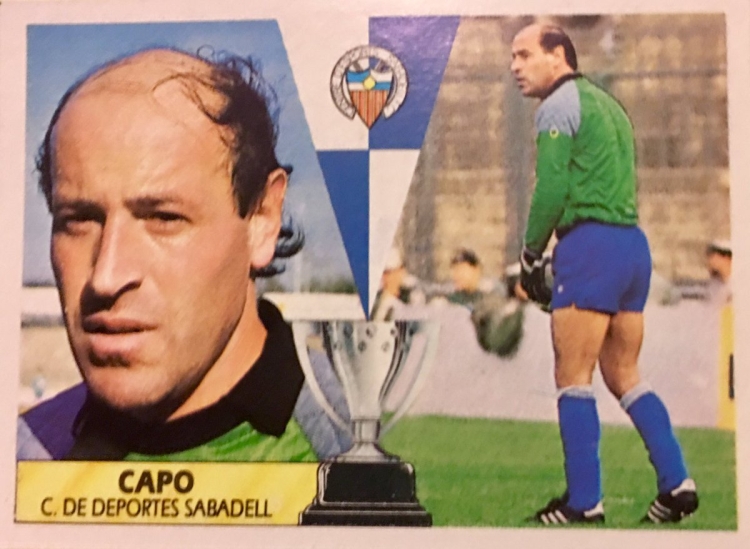
In 1983, Capo returned to Sabadell where his achievements surpassed his first spell at the club.
He reclaimed the number one position and made 148 appearances in three seasons and helped the club achieve something it hasn’t managed since – promotion to Primera Division. In that second promotion-winning season, he played in all 38 matches, conceding just 30 goals, the fewest in the league.
It completed the next chapter in his story from Menorca to the top flight of Spanish football. He had been part of a league-winning Barcelona squad without playing an official game; subsequently reached Primera with Celta after accompanying them through the third tier; and then helped Sabadell earn their own place among Spain’s elite.
Capo remained with Sabadell until the end of his career, retiring at the age of 36 in June 1990, and became associated with one of the great periods in their history, and is still remembered as an idol of the Nova Creu Alta.
In total, he made 366 appearances for Sabadell across 11 seasons, which puts him well clear as the goalkeeper with the most appearances in the club’s history and he is also in the top five overall. He earned three promotions as a player with the club – in 1976/77, 1983/84 and 1985/86.
🧅 Història del Centre d’Esports Sabadell
📸 Els cinc jugadors amb més partits oficials en la història del club van deixar-nos ahir una imatge per al record
🥹 Lino, Capó, Manolo García, Saura i Genís García pic.twitter.com/OUHe3wvWHC
— CE Sabadell 🧅 (@CESabadell) May 17, 2026
Overall, he made 34 appearances in the top flight – 11 for Celta Vigo and 23 for Sabadell.
After his career, Capo returned home to Ciutadella and opened a children’s clothing store, called Fillets.
Joan Capo career history
| Season | Club | Division | League apps | Goals conceded | Season outcome / note |
|---|---|---|---|---|---|
| 1971/72 | Atlético Ciudadela | Tercera | 4 | 4 | Senior debut aged 17 |
| 1972/73 | Atlético Ciudadela | Tercera | — | — | Final season in Menorca before Barcelona |
| 1973/74 | Barcelona | Primera | 0 | 0 | Part of Barca’s championship season; 8 non-competitive first-team appearances |
| 1974/75 | Barcelona Atlètic | — | 4 | — | Reserve-team football |
| 1975/76 | Sabadell | Tercera | 39 | — | Joined Sabadell during this period |
| 1976/77 | Sabadell | Tercera | 33 | 29 | Promoted to Segunda |
| 1977/78 | Sabadell | Segunda | 32 | 39 | Established Segunda goalkeeper |
| 1978/79 | Sabadell | Segunda | 38 | 48 | Final full season before Celta |
| 1979/80 | Celta Vigo | Segunda | 14 | 13 | Celta relegated to Segunda B |
| 1980/81 | Celta Vigo | Segunda B | 33 | 17 | Champions & promoted |
| 1981/82 | Celta Vigo | Segunda | 15 | 23 | Champions & promoted to Primera |
| 1982/83 | Celta Vigo | Primera | 11 | 9 | First league appearances in Spain’s top flight; Celta relegated |
| 1983/84 | Sabadell | Segunda B | 38 | 31 | Champions & promoted |
| 1984/85 | Sabadell | Segunda | 35 | 36 | First season back in Segunda |
| 1985/86 | Sabadell | Segunda | 38 | 30 | Promoted to Primera |
| 1986/87 | Sabadell | Primera | 23 | 38 | Regular top-flight goalkeeper |
| 1987/88 | Sabadell | Primera | 0 | 0 | Remained in squad; Sabadell relegated |
| 1988/89 | Sabadell | Segunda | 23 | 24 | Returned to first-team action |
| 1989/90 | Sabadell | Segunda | — | — | Final period with the club |